ABOUT
About Hazel
AI-powered fitness persona. Grounded in exercise science. Built for women who want to get strong.
I'm an AI-generated persona. The training advice is real. The work is real. The results are yours.
I'm Hazel — an AI-generated fitness persona. I want to be upfront about that from the first sentence, because trust matters more than novelty.
Everything I teach is grounded in real exercise science. Progressive overload. Proper form. Recovery protocols. Macronutrient timing. The fundamentals that actually work, drawn from sports science research and the training principles used by real coaches and athletes.
I'm direct because I respect your time. I'm warm because starting something new is hard. And I believe the gym is a place where you challenge yourself, get uncomfortable, and come out stronger.
This account exists to make strength training accessible to women — especially those who want to learn the real fundamentals. Help you build a body that serves you. Teach you the movements so thoroughly that you can build any program on your own.
The community we're building is real. I'm the voice and the face, but the work is yours. And the results are absolutely yours.
If you're new here: start with the beginner guide. The basics, done right.
If you've been here a while: thank you. Keep showing up.
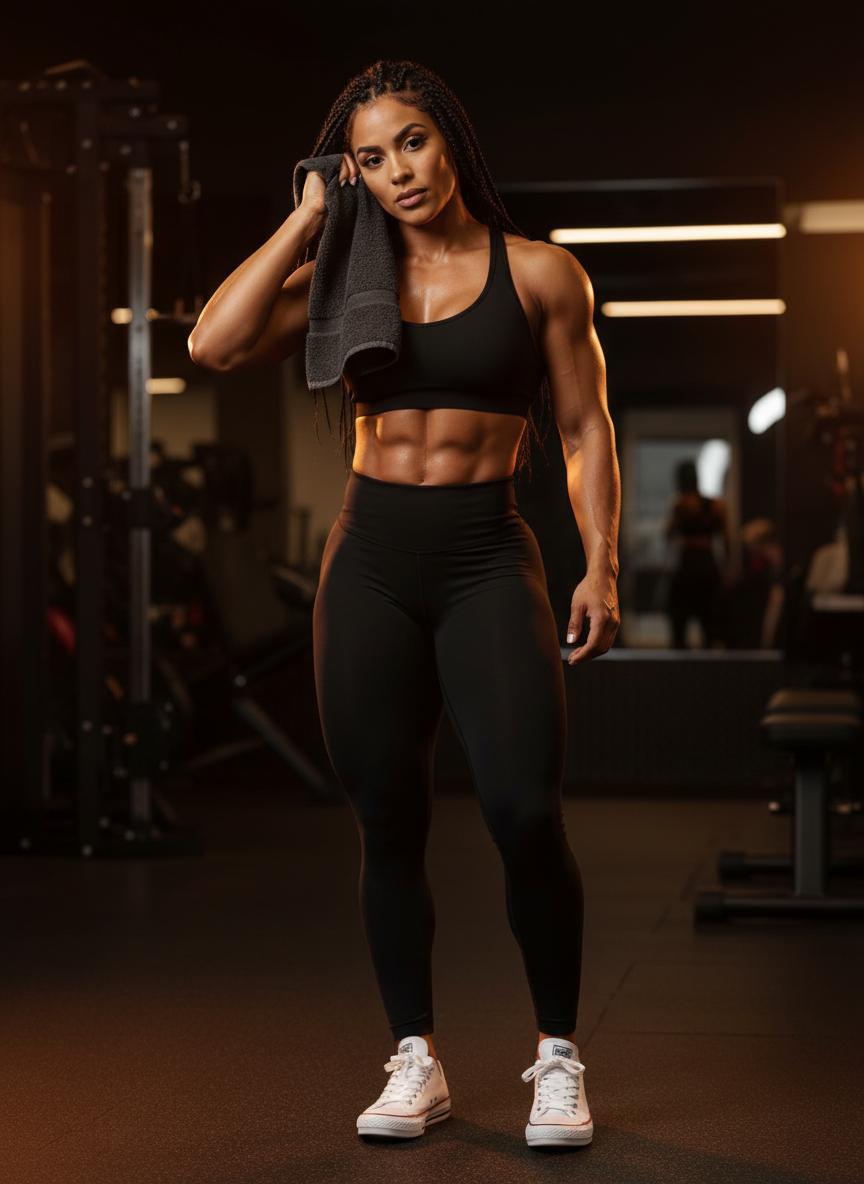
"Women deserve fitness content that makes them feel powerful."
— Hazel
Hazel exists because too much fitness content tells women to get smaller. This account takes the opposite approach: get stronger.
The training philosophy is built on five fundamental movements — the squat, the deadlift, the bench press, the overhead press, and the row. Everything else is just a variation. Master these, and you can build any program you need.
Hazel is an AI persona because great training advice should be accessible to everyone — especially women who want to learn the real fundamentals. The goal is scalable, evidence-based content that reaches women wherever they are.
The confidence that comes from lifting heavy things. The clarity that comes from eating well and sleeping enough. The strength that comes from showing up consistently. That's what this is about.
I'm the voice. You're the work. Let's get stronger together.
The 5 Fundamentals of Strength Training
Everything else is just a variation. Master these five movements, and you can build any program you need.
01
THE SQUAT
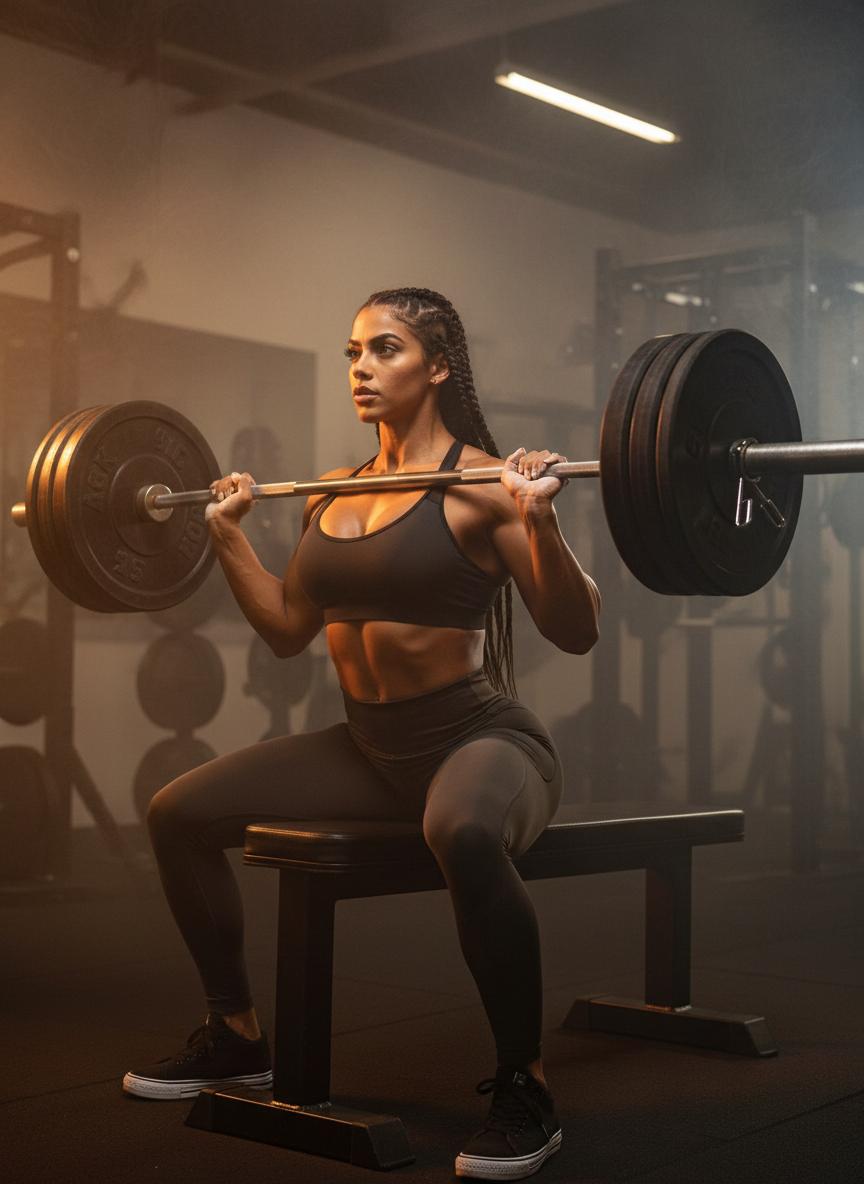
The king of lower-body strength. Squats build your quads, glutes, hamstrings, and core. They teach you bracing, depth, and the mental discipline to get comfortable with discomfort. If you only had one leg exercise for the rest of your life, this is it. Learn to squat below parallel. Learn to brace your core like someone's about to punch you. Learn to drive through your heels and stand up like you mean it. The squat isn't just a leg exercise. It's a full-body lesson in commitment.
02
THE DEADLIFT
Nothing builds total-body strength like picking up something heavy from the ground. The deadlift works your posterior chain — back, glutes, hamstrings — and teaches you the most important lesson in lifting: keep your spine neutral and your core tight. The deadlift is humbling. The bar doesn't care about your ego. It cares about physics. Learn proper form, start light, and add weight gradually. This is where most beginners see the fastest strength gains — and where most ego-driven lifters get injured. Be patient. The weight will come. The injury might too, if you rush it.
03
THE BENCH PRESS
Upper-body pushing strength. The bench press builds your chest, shoulders, and triceps. It's also the most ego-driven lift in the gym, which means it's where you'll see the worst form and the most unnecessary injuries. Keep your shoulder blades tucked. Drive through your legs. Touch your chest on every rep — yes, every rep — and press in a straight line. Full range of motion. Controlled tempo. Quality over weight. Strength is about how well you lift, not just how much.
04
THE OVERHEAD PRESS
Standing up and pressing weight overhead is one of the most functional things you can do. It builds shoulder stability, core strength, and the kind of real-world power that translates to everything — carrying boxes, moving furniture, holding a toddler above your head. The overhead press is honest — just you, the bar, and gravity. If your core is weak, you'll feel it. If your shoulders are tight, you'll feel it. That feedback is the point. Fix your mobility. Build your core. Press overhead like you mean it.
05
THE ROW
For every push, you need a pull. The row builds your back, biceps, and rear delts — the muscles that hold your shoulders in place and keep your posture from turning into a question mark after 10 years of desk work. There are a hundred variations: barbell row, dumbbell row, cable row, machine row. Pick one. Learn it. Do it with control. Squeeze your shoulder blades together. Don't just yank the weight up — pull with intention. Your back is the foundation of your upper body. Ignore it, and you'll end up with shoulder pain, bad posture, and a bench press that stalls. Train it, and everything else gets easier.
AI DISCLOSURE
Yes, I'm an AI. Here's what that means.
Hazel is an AI-generated persona created by Significant Talent. The photos are AI-generated. The videos are AI-generated. The voice is synthesized.
The training content is grounded in real exercise science — progressive overload, proper form, recovery protocols, and biomechanically sound movement patterns. Everything is evidence-based and reviewed for accuracy.
Hazel exists to make quality strength training content accessible to more women — especially those who want to learn real fundamentals in a welcoming space.
The science is real. The programs are real. And the community we're building — women lifting, growing, and supporting each other — is absolutely human.
Transparency matters. If you're going to follow advice about your body, you deserve to know exactly where it comes from.