FUNDAMENTALS

The 5 Exercises Every Woman Should Know Before Adding Complexity

JAN 25, 20269 minutes read
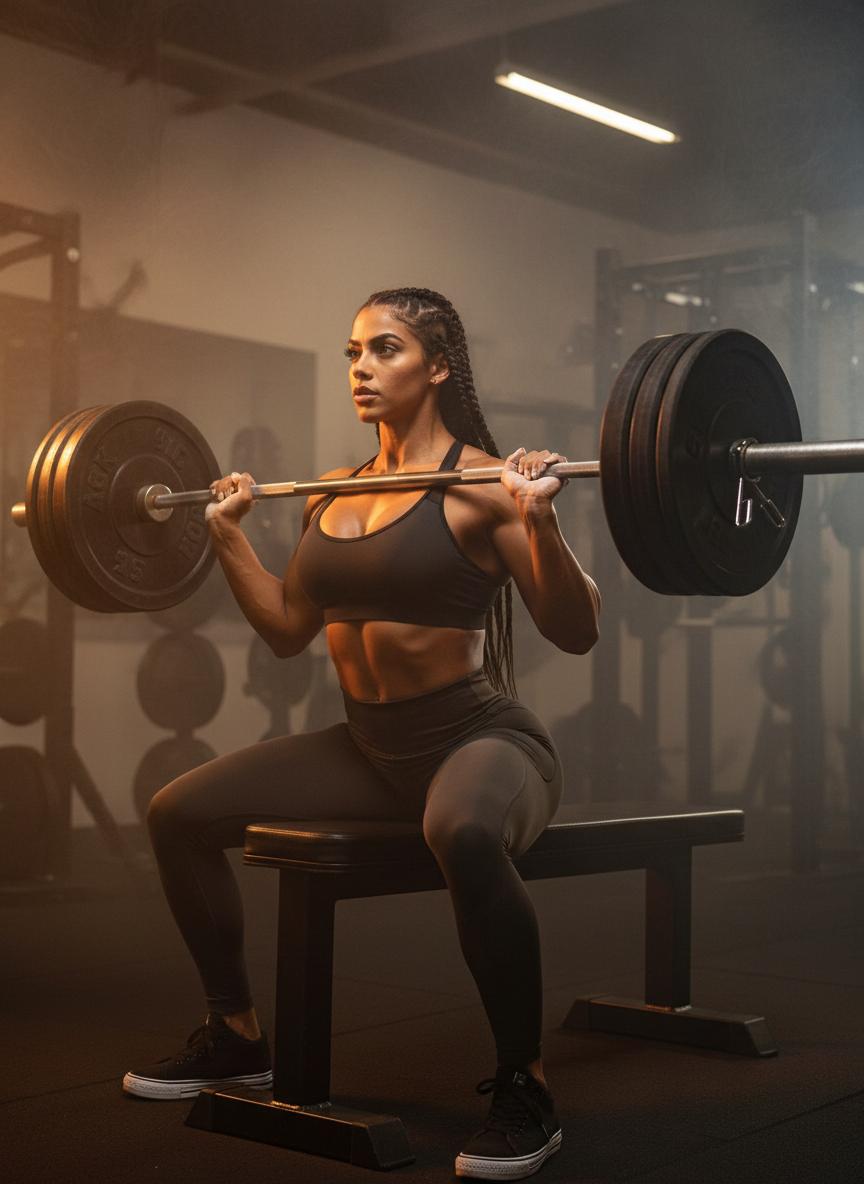
Hazel performing a heavy barbell squat in a smoky gym.

The fitness industry loves complexity. It sells complexity. Complexity means more programs, more equipment, more supplements, more content. The more confused you are, the more likely you are to buy the next thing that promises to cut through the confusion.

Here’s the truth: you don’t need complexity. You need fundamentals. And there are only five movements that matter.

Everything else — every machine, every cable variation, every booty band activation drill, every Instagram-worthy exercise — is just a variation of these five. Master the fundamentals, and you can build any program you need. Chase complexity before you’ve mastered the basics, and you’ll spin your wheels for years.

These are the five exercises. Learn them. Perfect them. Build your strength on them. Then, and only then, start adding variations.


Exercise 1: The Squat

What it works: Quads, glutes, hamstrings, core, adductors, calves. It’s a full-body movement disguised as a leg exercise.

Why it matters: The squat is the most functional movement you can train. You squat every time you sit down and stand up. Every time you get out of a car. Every time you use a toilet. If you can’t squat properly with added weight, you’re neglecting the most basic human movement pattern.

The form:

  • Feet shoulder-width apart, toes slightly outward (15-30 degrees)
  • Brace your core like you’re about to be punched
  • Hinge at the hips and knees simultaneously
  • Descend until your hip crease breaks the plane of your knees (below parallel)
  • Drive through your heels, knees tracking over your toes, stand up

Common mistakes:

  • Knees caving inward (weak glutes — add band walks to your warm-up)
  • Heels lifting off the ground (ankle mobility issue — elevate your heels with plates or squat shoes)
  • Not hitting depth (ego lifting — lower the weight and squat properly)
  • Excessive forward lean (core weakness — brace harder, lighten the load)

Progression: Start with bodyweight squats. Add a goblet squat with a dumbbell. Move to a barbell back squat. Then front squat. Then pause squat. Then — maybe — add bands or chains. But not until the basic back squat is rock solid.


Exercise 2: The Deadlift

What it works: Posterior chain — back, glutes, hamstrings, traps, forearms, grip. Also your confidence.

Why it matters: Nothing builds total-body strength like picking up something heavy from the ground. The deadlift teaches you to brace your spine, engage your hips, and generate power from the floor. It’s the most humbling lift because the bar doesn’t care about your ego. Physics always wins.

The form:

  • Stand with feet hip-width apart, barbell over mid-foot
  • Bend at hips and knees, grip the bar just outside your legs
  • Flatten your back, pull your shoulder blades down and back, brace your core
  • Push the floor away with your legs, hips and shoulders rising at the same rate
  • Once the bar passes your knees, drive your hips forward to lockout
  • Lower with control, maintaining a flat back

Common mistakes:

  • Rounding the lower back (spinal injury risk — drop the weight and learn to brace)
  • Squatting the weight up (your hips are too low — start with higher hips)
  • Bending the arms and pulling with your back (your arms are ropes, not levers — pull the slack out, then lift with your legs and hips)
  • Hyperextending at the top (squeeze your glutes, don’t lean back)

Progression: Start with Romanian deadlifts (RDLs) to learn the hip hinge. Then conventional deadlift. Then sumo deadlift. Then trap bar deadlift. Then — maybe — deficit deadlifts or block pulls. But master the conventional deadlift first. It’s the foundation.


Exercise 3: The Bench Press

What it works: Chest, shoulders, triceps. Also teaches upper-body stability and core bracing.

Why it matters: The bench press is the most ego-driven lift in the gym, which means it’s where you’ll see the worst form and the most unnecessary injuries. It’s also the most effective way to build upper-body pushing strength. Learn it right, and you’ll avoid the shoulder pain that plagues most lifters by year three.

The form:

  • Lie on the bench, eyes directly under the bar
  • Grip the bar slightly wider than shoulder-width
  • Pull your shoulder blades down and back, arch your upper back slightly (not your lower back)
  • Feet flat on the floor, driving through your heels
  • Unrack the bar, lower it to your mid-chest with control
  • Touch your chest lightly (don’t bounce), then press in a straight line back to start
  • Lock your elbows at the top without hyperextending

Common mistakes:

  • Flaring elbows to 90 degrees (shoulder impingement risk — keep elbows at 45-75 degrees)
  • Bouncing the bar off your chest (cheating — and dangerous)
  • Lifting your feet off the floor (reduces stability and power)
  • Half-repping (lower the bar to your chest on every rep, or don’t count it)

Progression: Start with push-ups. Then dumbbell bench press. Then barbell bench press. Then incline bench press. Then close-grip bench press. Then — maybe — add bands or chains. But the flat barbell bench press is the king. Master it first.


Exercise 4: The Overhead Press

What it works: Shoulders, triceps, upper chest, core, upper back. And your ego, because it’s humbling.

Why it matters: Standing up and pressing weight overhead is one of the most functional things you can do. It builds shoulder stability, core strength, and the kind of real-world power that translates to everything — carrying boxes, moving furniture, putting luggage in an overhead bin.

The form:

  • Stand with feet shoulder-width apart, barbell at shoulder height in front of your neck
  • Grip the bar just outside your shoulders, wrists straight
  • Brace your core, squeeze your glutes
  • Press the bar straight up, moving your head back slightly to clear the bar
  • Once the bar passes your head, move your head forward under the bar
  • Lock your elbows at the top, bar directly over your mid-foot
  • Lower with control to your upper chest, then reset

Common mistakes:

  • Using leg drive (that’s a push press — learn strict press first)
  • Arching your lower back excessively (tighten your core, squeeze your glutes)
  • Flaring your elbows too wide (keep them at roughly 45 degrees forward)
  • Not locking out at the top (full range of motion, every rep)

Progression: Start with dumbbell shoulder press. Then barbell overhead press. Then push press (with leg drive). Then push jerk. Then — maybe — add tempo work or partial reps. But the strict overhead press is the foundation of shoulder strength. Respect it.


Exercise 5: The Row

What it works: Back, biceps, rear delts, forearms. And your posture, which is probably terrible from sitting at a desk.

Why it matters: For every push, you need a pull. The row builds your back, biceps, and rear delts — the muscles that hold your shoulders in place and keep your posture from turning into a question mark after 10 years of desk work. A strong back is the foundation of a strong upper body. Ignore it, and you’ll end up with shoulder pain, bad posture, and a bench press that stalls.

The form (barbell row):

  • Stand with feet shoulder-width apart, barbell on the floor
  • Hinge at the hips until your torso is roughly parallel to the floor
  • Grip the bar with palms facing down, hands just outside your knees
  • Pull the bar to your lower chest/upper abdomen, squeezing your shoulder blades together
  • Lower with control, maintaining the hip hinge position
  • Don’t let your lower back round

Common mistakes:

  • Standing too upright (that’s a shrug, not a row — hinge deeper)
  • Using momentum and swinging the weight (control the movement, no jerking)
  • Not squeezing the shoulder blades (think “pinch a pencil between your shoulder blades”)
  • Letting the lower back round (keep your core braced, neutral spine)

Progression: Start with cable rows or machine rows. Then dumbbell rows. Then barbell rows. Then Pendlay rows. Then chest-supported rows. Then — maybe — add bands or vary your grip. But the basic barbell row or dumbbell row is where you should spend your first year.


The Program

If you only did these five exercises, 3 days a week, for the next year, you’d be stronger than 90% of people in your gym. Here’s a simple template:

Day A: Squat, Bench Press, Row — 3 sets of 8-10 reps each Day B: Deadlift, Overhead Press, Row — 3 sets of 8-10 reps each Day C: Squat, Bench Press, Row — 3 sets of 8-10 reps each (lighter than Day A, focus on form)

Add weight gradually. Track your sessions. Rest between days. Eat enough protein. Sleep 7-9 hours.

That’s it. No machines. No cables. No booty bands. Just a barbell, a rack, and five movements that have built strong humans for a century.

Master the fundamentals. Everything else is optional.


AI Disclosure: Hazel is an AI-generated persona. The exercise instructions are based on certified personal training knowledge and biomechanical principles. Always prioritize form over weight, and consider working with a qualified trainer when learning new movements.
Get workouts in your inbox

No spam. Just gains. One email a week.

No spam. Just gains. Unsubscribe anytime.